

Resources
Aging in Place Resources: Expert Home Care Support for Seniors
Welcome to our collection of aging in place resources, designed to provide support and guidance for seniors wishing to maintain their independence and comfort in the familiar surroundings of their own homes. At HomeCare Advocacy Network, we understand the importance of creating a nurturing and secure environment for aging individuals, and our selection of resources encompasses everything from navigating the dementia journey to how to start home care conversations with your loved one. Explore our aging in place resources to discover how you can optimize living conditions, access essential services, and enhance overall well-being for yourself or your loved ones.
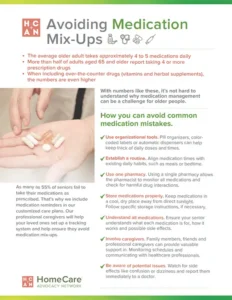
Avoiding Medication Mix-Ups
As many as 55% of seniors fail to take their daily medications as prescribed, which creates a major safety risk. Download this guide to explore how we help families set up simple tracking systems and use proactive tools to avoid dangerous mix-ups. We provide the reliable, compassionate care your loved ones need to stay safe and healthy at home.
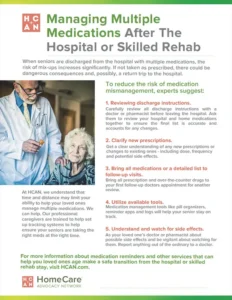
Managing Multiple Medications After A Hospital Stay
The transition from the hospital to home greatly increases the risk of dangerous medication errors. Read this helpful resource to learn how our thoroughly trained professional caregivers ensure safe medication compliance during this vulnerable time. Let us provide safe hands for your loved ones so you can step back and enjoy true peace of mind.
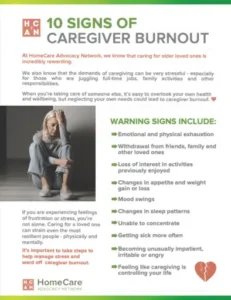
10 Signs of Caregiver Burnout
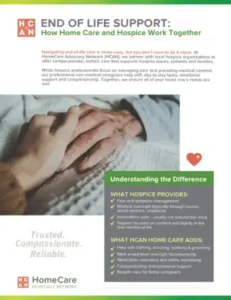
End-of-Life Support: How Home Care and Hospice Work Together
Navigating end-of-life care can be overwhelming, but families don’t have to do it alone. In partnership with local hospice providers, HomeCare Advocacy Network offers non-medical support—such as personal care, meal prep, companionship, and respite care—to help ensure comfort, dignity, and peace of mind during this difficult time. Our compassionate caregivers work alongside hospice teams to provide consistent, personalized care for patients and their loved ones.
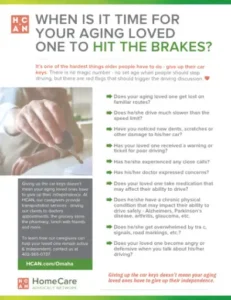
When is it Time for Your Aging Loved One to Stop Driving?
There is no set age when someone should stop driving, but certain warning signs may indicate it’s time to have the conversation. Getting lost on familiar routes, driving too slowly, accumulating unexplained dents, or receiving traffic tickets can all be red flags. Medical conditions, medications, and struggles with traffic signals or road markings may also affect driving ability.
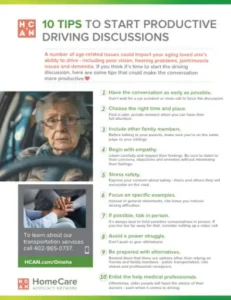
10 Tips to Start Productive Driving Discussions
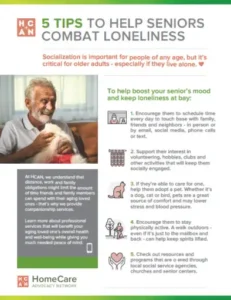
5 Tips to Help Seniors Combat Loneliness
Loneliness can have a significant impact on seniors’ mental and physical well-being, especially for those living alone. This helpful resource from HomeCare Advocacy Network outlines five practical ways to keep seniors engaged and socially connected.
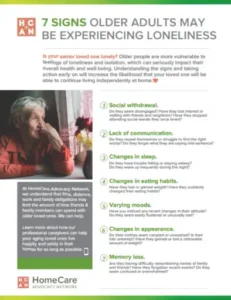
7 Signs Older Adults Maybe Experiencing Loneliness
Is your senior loved one lonely? Older people are more vulnerable to feelings of loneliness and isolation, which can seriously impact their overall health and well-being. Understanding the signs and taking action early on will increase the likelihood that your loved one will be able to continue living independently at home.
Hospital to Home: How Home Care Supports Safe and Smooth Transitions
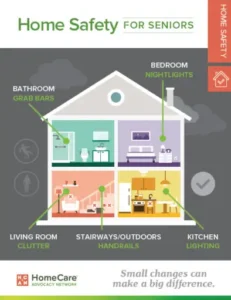
Home Safety Checklist for Seniors
Ensure your home is safe for seniors with our comprehensive Home Safety Checklist. This detailed guide highlights small changes that can significantly improve safety in various areas of the home, including the kitchen, bathroom, living room, bedroom, and stairways. Key recommendations include installing grab bars, improving lighting, reducing clutter, and making accessibility modifications. Perfect for caregivers and families, this checklist aims to create a safer living environment for seniors, enhancing their comfort and well-being. Download now to start making your home safer today!
Navigating the Dementia Journey
When your loved one receives a dementia diagnosis, you quickly learn there are more questions than answers. Of course, we don’t have all the answers, but we do have a lot of personal and professional experience with dementia – and we’d like to share what we’ve learned with you. Our free E-Book – Navigating Your Dementia Journey – is filled with tips and advice that will help you make the most of the good days and make it through the challenging ones.
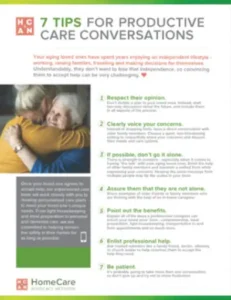
7 Tips for Productive Home Care Conversations
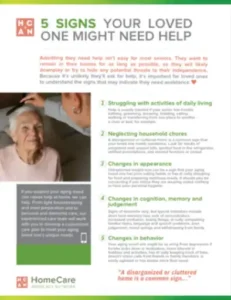
5 Signs Your Loved One Might Need Help
Older people rarely ask for help. They’re afraid of losing their independence, and they don’t want to burden family members or friends. Unfortunately, that often means they’re not getting the help they need with things like housekeeping, meal preparation and personal care.
Schedule a FREE Care Consultation
By messaging, you agree to receive messages related to appointment reminders, status updates, and answers to FAQ’s at the provided number from HomeCare Advocacy Network . Message frequency varies, and standard message and data rates may apply. You have the right to OPT-OUT receiving messages at any time. To OPT-OUT, reply “STOP” to any text message you receive from us. Reply HELP for assistance.