

A quick look inside your aging parent’s refrigerator might reveal more about their well-being than you think. Are you seeing fresh fruits and vegetables, or is it mostly frozen dinners and processed snacks? Ensuring older adults maintain a nutritious, balanced diet is a cornerstone of healthy aging, but it can present significant challenges, especially for those living alone.
It can be tough for seniors to get to the grocery store regularly if they no longer drive. Many also find that cooking a full, nutritious meal requires more energy than they have. For some, the simple act of cooking for one just isn’t as enjoyable as preparing a meal for a spouse or family. It often feels easier to open a can or use the microwave.
This guide offers five practical nutrition tips for seniors, helping you support your loved ones in making healthy food choices every day.
1. Understand What a Healthy Plate Looks Like
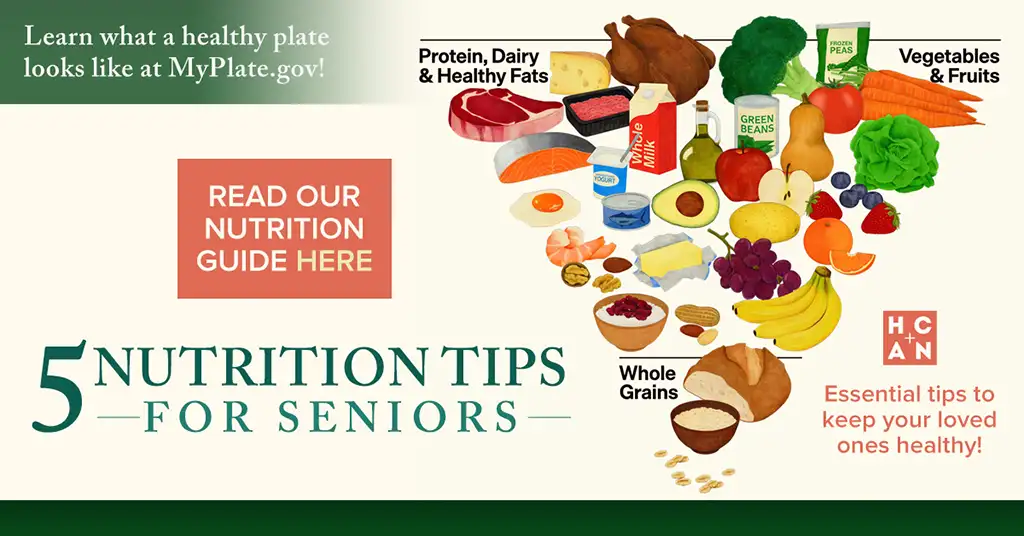
You might recall the old food pyramid from school, but the USDA has a much simpler guide now called MyPlate. This straightforward visual tool shows exactly how the five main food groups should be proportioned on a plate, providing the essential building blocks for a healthy diet.
MyPlate emphasizes filling half your plate with fruits and vegetables, with the other half split between grains and protein. A serving of dairy on the side completes the meal. Using this model can take the guesswork out of meal planning and help you and your loved one create balanced, satisfying meals.
2. Focus on Important Nutrients
To ensure your aging loved ones get the full spectrum of nutrients they need, encourage them to eat a wide variety of foods. A simple rule of thumb is to make their plate look like a rainbow. Brightly colored foods are typically rich in vitamins and antioxidants.
A healthy meal for a senior should include:
- Lean Protein: This is crucial for maintaining muscle mass and strength. Good sources include lean meats, seafood, eggs, and beans.
- Fruits and Vegetables: Aim for a mix of colors like orange, red, green, and purple to get a variety of nutrients.
- Whole Grains: Opt for brown rice, whole wheat pasta, and quinoa instead of refined grains.
- Low-Fat Dairy: Milk, yogurt, and cheese provide calcium for bone health.
It’s also important to choose foods high in fiber, which aids digestion, and low in sodium, which helps manage blood pressure.
3. Learn to Read Nutrition Facts Labels
The best foods are often whole foods—those that are not processed or packaged. You’ll typically find these on the perimeter of the grocery store in the produce, fresh meat, and dairy sections.
When you do buy packaged foods, the Nutrition Facts label is your best friend. Take a moment to read the labels to find items lower in saturated fat, added sugars, and sodium. This simple habit can make a significant difference in the overall healthfulness of your loved one’s diet.
4. Adhere to Recommended Serving Sizes
Maintaining a healthy weight is key to overall wellness, and this requires eating the right amount of food for one’s age and activity level. Portion sizes in restaurants and on packages have grown over the years, making it easy to overeat.
The American Heart Association provides helpful guidelines on recommended daily servings for adults aged 60 and over. Paying attention to these recommendations can help prevent unintentional weight gain and ensure your loved one gets the right balance of calories and nutrients.
5. Prioritize Hydration
Water is an essential nutrient that is often overlooked. Dehydration is a common and serious issue among older adults, as the sense of thirst can diminish with age.
Encourage your senior loved ones to drink small amounts of fluids consistently throughout the day, rather than waiting until they feel thirsty. Water, tea, and coffee are excellent choices. It’s best to minimize sugary drinks and those high in sodium, unless a doctor has advised otherwise for specific medical reasons.
A Partner in Healthy Aging
We understand that it isn’t always possible for busy families to oversee every meal. That’s where professional in-home care can provide peace of mind. As part of a customized care plan, caregivers can assist with shopping for healthy foods and preparing balanced, delicious meals.
Perhaps just as importantly, they add an ingredient you won’t find on any label: companionship. Sharing a meal with someone else makes it more enjoyable and often encourages better eating habits. When you can’t be there, a caregiver ensures your loved one doesn’t have to eat alone.
For more information about meal prep and other services that can help your loved ones age safely in their home, call yourlocal HCAN office or visit HCAN.com.