

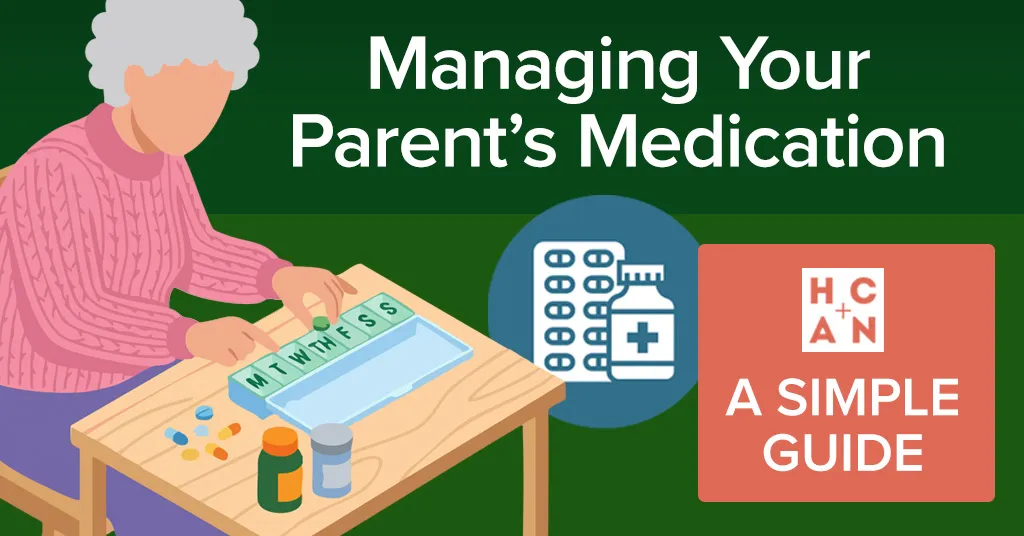
Medication management for seniors is one of the most common and preventable causes of health complications at home. As many as 55% of seniors fail to take their medications as prescribed. Simple tracking systems, clear communication with healthcare providers, and the support of a professional caregiver can dramatically reduce the risk of dangerous mix-ups.
You drop off your parent’s prescriptions, organize the pill bottles on the counter, and feel confident the system is in place. Then, a few days later, you discover they’ve been doubling up on one medication and skipping another entirely. Sound familiar?
Medication management for seniors is one of the most stressful — and consequential — responsibilities family caregivers face. It’s also one of the most common sources of preventable harm. The goal of this guide is simple: give you practical tools to help your parent take the right medications, at the right time, in the right dose — every single day.
How Big Is the Prescription Adherence Problem Among Seniors?
The numbers tell a sobering story. According to Department of Health and Human Services, as many as 55% of seniors fail to take their daily medications as prescribed. That’s more than half of all older adults missing doses, taking incorrect amounts, or abandoning prescriptions altogether.
The consequences go far beyond a missed dose here or there. Poor medication adherence among seniors is linked to:
- Avoidable hospitalizations
- Accelerated disease progression
- Dangerous drug interactions when medications overlap
- Falls and injuries caused by unchecked side effects
Why does this happen so often? Seniors manage an average of four to five prescription medications simultaneously, and many take far more than that. Add in complex dosing schedules, multiple prescribing physicians who may not communicate with each other, and the cognitive changes that come with aging — and it’s easy to see why mix-ups happen.
For you, as the adult child trying to keep your parent safe at home, this is a problem worth solving proactively — before it becomes a crisis.
What Are the Most Common Causes of Medication Mix-Ups in Older Adults?
Understanding where the system breaks down helps you fix it in the right places. The most common causes of medication errors among seniors include:
- Polypharmacy: Taking five or more medications simultaneously significantly increases the likelihood of dangerous interactions and confusion.
- Complex schedules: Some medications must be taken with food, others on an empty stomach. Some are twice daily, others weekly. Keeping track without a system is nearly impossible.
- Multiple prescribers: When a cardiologist, a primary care physician, and a rheumatologist are all prescribing independently, no one may have a complete picture of what your parent is taking.
- Cognitive decline: Even mild memory issues can disrupt a medication routine that previously ran smoothly.
- Packaging confusion: Generic drug names, similar-looking bottles, and small print create real barriers for older adults with vision or dexterity challenges.
- Stopping early: Feeling better often prompts seniors to stop a course of antibiotics or pain medication before it’s complete.
What Medication Tracking Systems Work Best for Seniors?
The best system is the one your parent will actually use. That said, a few tools have proven especially effective:
Pill Organizers and Blister Packs
A weekly pill organizer — divided by day and time of day — is one of the simplest, most effective tools available. For seniors who take many medications, a pharmacy can prepare pre-packed blister packs that organize every dose in clearly labeled compartments. This eliminates the need to count pills or manage multiple bottles.
Medication Management Apps
For tech-comfortable families, apps like Medisafe or CareZone send automated reminders to your parent’s phone (and yours) when a dose is due or missed. Many apps also flag potential drug interactions and allow family members to monitor adherence remotely.
Centralized Medication List
Every caregiver — family member, professional, or medical — should have access to a single, up-to-date medication list that includes:
- Drug name (brand and generic)
- Dosage and frequency
- Prescribing physician
- Purpose of the medication
- Known allergies or interactions
Bring this list to every medical appointment. It gives doctors a complete picture and prevents duplicate prescriptions.
Pharmacy Synchronization
Ask your parent’s pharmacy about synchronizing all prescriptions to fill on the same day each month. This reduces the number of pharmacy trips, minimizes the risk of running out of critical medications, and makes it easier to track what’s current.
How Should You Handle Medication Transitions After a Hospital Stay?
Hospital-to-home transitions are particularly high-risk moments. Discharge paperwork often introduces new medications, adjusted dosages, and discontinued drugs — all at once, while your parent is tired and overwhelmed. Research consistently shows that this transition period significantly increases the risk of dangerous medication errors.
Here’s how to manage it safely:
- Request a full medication reconciliation at discharge: Ask the hospital’s care team to walk through every medication — what’s new, what’s changed, and what’s been stopped.
- Fill prescriptions before leaving: Don’t send your parent home without the medications they need in hand.
- Schedule a follow-up appointment within a week: A post-discharge check-in allows the physician to review whether new medications are working and catch side effects early.
- Have a caregiver or family member present for the first few days: The highest-risk period is the first 72 hours at home.
What Role Do Professional Caregivers Play in Medication Safety?
A professional caregiver’s involvement can be the difference between a functioning medication routine and a dangerous one. At HomeCare Advocacy Network, caregivers are trained to provide consistent medication reminders, ensuring your parent takes the right medications at the right times — without missing doses or doubling up.
Importantly, professional caregivers also serve as a continuous set of eyes in the home. They notice changes in behavior or mood that might indicate a medication problem — unusual drowsiness, confusion, loss of appetite — and communicate these observations to family members or healthcare providers promptly.
Here’s what HCAN’s caregivers do to support medication management for seniors:
- Provide timely medication reminders: Caregivers prompt seniors to take medications according to their prescribed schedule.
- Monitor for side effects: Caregivers observe and document any unusual symptoms, flagging concerns for the family or medical team.
- Support organization systems: Whether that means refilling a weekly pill organizer or helping a senior navigate a medication app, caregivers provide hands-on support.
- Communicate with family caregivers: Regular updates keep you informed and in control, even from a distance.
It’s worth noting that non-medical caregivers provide reminders and organizational support — they DO NOT administer medications or make medical decisions. This is an important distinction that ensures safety and proper care boundaries.
Medication Safety Is Not a One-Time Fix
Your parent’s medications will change over time — new prescriptions, adjusted doses, discontinued drugs. The tracking system that works today needs regular review and updating. Set a reminder to audit your parent’s medication list at every doctor’s visit, after any hospitalization, and at least once every six months.
If managing this on your own feels overwhelming, you’re not alone. Many family caregivers reach out for help precisely because medication management is where they feel most out of their depth — and most afraid of making a mistake.
At HCAN, we’re here to help. Our compassionate caregivers bring consistency, structure, and a careful eye to every aspect of your parent’s daily care — including medication safety. Contact us today to schedule a free care consultation and find out how we can create a personalized care plan for your loved one.
Frequently Asked Questions
What is the biggest risk of poor medication management in seniors?
The most serious risks include dangerous drug interactions, accidental overdose, and conditions that worsen because medications are skipped or stopped. Poor adherence is also a leading cause of preventable hospitalizations among older adults.
Can a non-medical caregiver help my parent with medications?
Yes, within specific boundaries. Non-medical caregivers can provide medication reminders and monitor for side effects. They do not administer injections, make dosing decisions, or dispense controlled substances. A licensed nurse or physician handles those responsibilities.
How do I know if my parent is taking their medications correctly?
Signs of poor adherence include running out of medications too quickly or not quickly enough, worsening health conditions, and confusion about what each drug does. A professional caregiver’s daily presence is one of the most reliable ways to catch these issues early.
What should I bring to a pharmacy consultation about my parent’s medications?
Bring a complete list of all current medications (including over-the-counter drugs and supplements), your parent’s insurance information, and a list of known allergies. Ask the pharmacist to review the full list for potential interactions.
Is medication synchronization available at most pharmacies?
Most major pharmacy chains offer medication synchronization programs. Ask your parent’s pharmacist about enrolling — it simplifies refills and reduces the risk of running out of critical medications.