

As winter fades and the first signs of spring appear, our thoughts naturally turn from ice and snow to the unpredictability of storm season. For many of us, a thunderstorm is just an inconvenience. But when you are caring for an aging parent, the rumble of thunder can trigger a wave of anxiety.
Will Mom be able to get to the basement in time? Does Dad have his medication if the power goes out for days?
These are the questions that keep you up at night. At HomeCare Advocacy Network (HCAN), we understand that heavy weight on your shoulders. You want to protect your parents just as they once protected you. To help you regain your peace of mind, we have compiled a comprehensive guide on severe weather safety for seniors. With a little preparation, you can ensure your loved ones are ready for whatever Mother Nature has in store.
Why Severe Weather Poses Unique Risks for Seniors
When severe weather strikes—whether it’s damaging thunderstorms, flash flooding, or tornadoes—seconds often count. Unfortunately, the very nature of aging can make reacting quickly a significant challenge. Understanding these unique risks is the first step in creating a plan that truly works.
Physical and Cognitive Limitations
“Many seniors don’t move as quickly as they used to because of physical limitations or memory issues,” explains Sierra Goetz, co-founder and senior vice president of operations at HCAN.
Issues like arthritis can make it difficult to open emergency kits or navigate stairs to a storm shelter. Hearing loss might mean a senior misses a siren or a weather alert on the TV. Furthermore, cognitive decline can make complex decision-making difficult during a high-stress event. Your loved one might feel confused or paralyzed by fear rather than taking immediate action.
The Importance of Proactive Planning
Because of these limitations, reactive measures aren’t enough. You cannot wait until the sky turns green to figure out the plan. Proactive planning is the bridge between vulnerability and safety.
“It’s important for families to take a few extra steps to help their aging loved ones prepare for severe weather—especially if they live alone,” Goetz advises.
By planning ahead, you aren’t just stockpiling water; you are removing the need for your loved one to make split-second decisions under pressure. You are giving them—and yourself—a roadmap to follow when the unexpected happens.
How to Prepare Seniors for Severe Weather
Preparation doesn’t have to be overwhelming. You can tackle these tasks one weekend at a time. Here are the practical steps you can take to ensure severe weather safety for seniors.
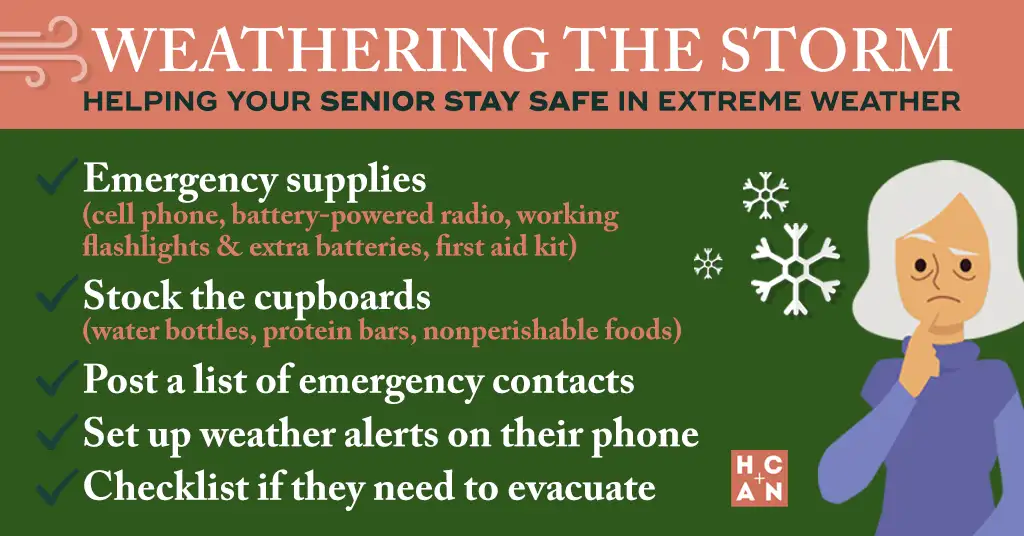
Must-Have Emergency Supplies
One of the most effective ways to ensure safety is to build a dedicated emergency kit. This kit should be easy to access and clearly labeled.
Consider stocking the following items:
- Communication: A fully charged cell phone, a battery-powered or hand-crank radio, and a list of emergency contacts.
- Lighting: Working flashlights with plenty of extra batteries. Avoid candles, which pose a fire risk.
- Nutrition: A three-day supply of non-perishable food (like protein bars and canned goods with pop-tops) and several gallons of water.
- Health: A comprehensive first aid kit. If your loved one takes daily prescriptions, ensure they always have at least a three-day supply on hand.
- Comfort: Blankets, a change of clothes, and personal hygiene items.
Pro-Tip: If your loved one relies on medical devices that require electricity (like oxygen or a CPAP machine), contact your local power company. Many have priority lists for customers with medical needs during outages.
Setting Up Weather Alerts and Communication Plans
Does your mom still rely on the evening news for weather updates? In a fast-moving storm, that might not be enough.
Take the time to set up weather alerts on their cell phone or install a weather app that pushes notifications for watches and warnings. If technology is a barrier, consider a NOAA weather radio, which can be programmed to alert them loudly only for your specific county.
Next, establish a communication tree. Post a list of emergency contacts on the fridge where it is easily seen. This list should include:
- Your number and work number.
- The number of a neighbor who can check in quickly.
- At least one out-of-state contact. Sometimes local lines are jammed, but a long-distance call will go through. This person can act as the central hub for family updates.
Creating an Evacuation Checklist
Sometimes, the safest choice is to leave. Evacuation can be incredibly stressful for seniors, so having a “Go Bag” checklist ready is crucial.
Put together an emergency checklist of everything they will need if they have to evacuate. This should include:
- Medical items: Medications, eyeglasses, hearing aids (and batteries), and denture supplies.
- Documents: Copies of insurance cards, photo identification, and a list of doctors.
- Essentials: Cash (ATMs may not work), special dietary foods, and a change of clothes.
Designate a meeting spot—a church, school, or community center—that can be accessed via multiple routes in case roads are blocked. Drive the route with your loved one so it feels familiar, not frightening.
Additional Tips for Long-Distance Caregivers
Caring for a parent from a distance adds a layer of complexity to severe weather safety. You can’t just drive over when the sirens sound. However, you can still coordinate a robust safety net.
Enlisting Local Help for Aging Loved Ones
“Ask for help,” Goetz urges. “If distance separates you from your aging loved ones, enlist the help of someone in the area to help your aging loved one prepare for severe weather and provide assistance if they have to leave their home.”
This could be a trusted neighbor, a fellow church member, or a local friend. Introduce yourself to them and exchange contact information. Ask if they would be willing to be the “boots on the ground” to check on your parent immediately after a storm passes. Most people are happy to help; they just need to be asked.
How HCAN Can Support Senior Safety
We know you can’t always be there. You have a job, perhaps children of your own, and you live miles away. That guilt can be overwhelming, but you don’t have to carry it alone.
“At HCAN, we understand that time or distance may limit your ability to be with aging loved ones—that’s where we come in,” Goetz says. “Our caregivers are trained to help seniors age safely in place—including preparing them for severe weather. We’ll make sure they have everything they need and know what to do when bad weather is in the forecast.”
Our professional caregivers act as an extension of your family. We can help maintain the emergency kit, ensure weather alerts are active, and provide that comforting presence during a storm that your parent craves. It’s about more than just safety; it’s about ensuring your loved one feels secure and supported, even when the wind howls.
Conclusion: Stay Prepared and Stay Safe
Severe weather is a fact of life, but fear doesn’t have to be. By taking these proactive steps—building a kit, setting up alerts, and enlisting support—you are empowering your loved one to face storm season with confidence.
Remember, the goal isn’t just survival; it’s dignity and peace of mind. When you know your mom or dad is prepared, you can breathe a little easier, too.
Need help preparing your senior loved ones for severe weather? Contact HCAN today to learn how our caregivers can ensure their safety and your peace of mind!