

You’ve started to notice that mom could use a little extra help. Maybe the laundry is piling up, or she’s skipping meals, or she just seems lonely since dad passed. You want to support her, but you’re already stretched thin between work, your own family, and a thousand other things.
So you start searching for help, and suddenly you’re swimming in confusing terms. Home care. Home health. Skilled nursing. Companion care. What does any of it actually mean?
Let’s clear up the confusion. This guide explains non-medical home care in plain English, so you can decide whether it’s the right fit for your loved one. You’ll learn what it includes, what it doesn’t, who it helps, and how it works day to day.
Quick takeaways:
- Non-medical home care helps with daily living, not medical treatment.
- It’s different from clinical home health, which is provided by nurses and therapists.
- It helps older adults stay safely and independently at home.
- The right caregiver gives your family peace of mind and gives you back your role as a daughter or son.
What Non-Medical Home Care Really Means
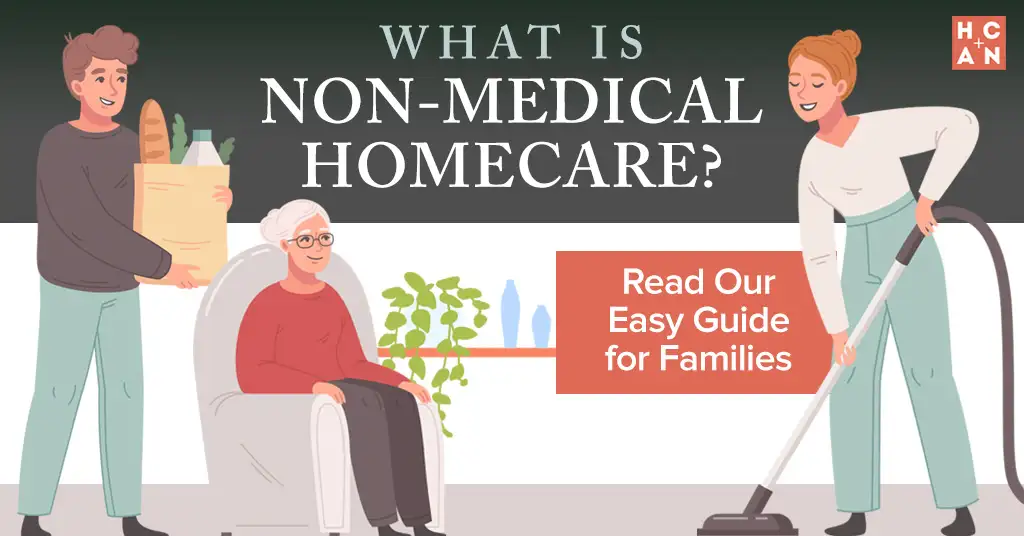
Non-medical home care is hands-on, everyday support that helps older adults live safely and comfortably in their own homes. It’s sometimes called personal care, companion care, or simply “home care.”
The key word here is non-medical. Caregivers help with the activities of daily living, the ordinary tasks that become harder with age. They don’t perform medical procedures, give injections, or treat health conditions.
Think of it this way: a non-medical caregiver helps your mom get safely in and out of the shower, prepares her a warm lunch, and drives her to her hair appointment. They focus on her comfort, safety, and quality of life, the things that help her keep enjoying the life she’s built.
So what? This kind of support fills the gap between fully independent living and more intensive medical care. For many families, it’s exactly the help they’ve been looking for.
What Services Are Usually Included
Non-medical home care covers a wide range of everyday needs. The right plan is tailored to your loved one, so no two are exactly alike.
Common services include:
- Personal care: Help with bathing, dressing, grooming, and toileting
- Meal support: Planning, shopping for, and preparing nutritious meals
- Light housekeeping: Laundry, dishes, dusting, and keeping the home tidy
- Medication reminders: Prompting your loved one to take pills on time (not administering them)
- Transportation: Rides to appointments, errands, and social outings
- Companionship: Conversation, games, walks, and simply being present
- Mobility help: Steadying assistance with walking and moving safely
- Memory care support: Gentle routines and supervision for those with dementia
Notice the common thread. Every one of these tasks protects dignity and helps your loved one stay independent at home.
What Non-Medical Home Care Does Not Include
It’s just as important to know what’s outside the scope of non-medical care. This is where many families get confused.
Non-medical caregivers do not:
- Give injections or manage IV therapy
- Provide wound care or change medical dressings
- Administer medications (they can only remind)
- Perform physical, occupational, or speech therapy (can help with prescribed exercised)
- Monitor or treat medical conditions
- Insert or care for catheters and feeding tubes
These tasks require a licensed medical professional. If your loved one needs them, that’s a sign to look into clinical home health, which we’ll explain next.
Non-Medical Home Care vs. Home Health: What’s the Difference?
This is the single biggest point of confusion for families, so let’s make it crystal clear. People often assume all in-home help is medical. It isn’t.
Non-medical home care focuses on daily living and quality of life. It usually:
- Is provided by trained caregivers (no medical license required)
- Helps with personal care, meals, housekeeping, and companionship
- Is flexible and ongoing, for as long as your family needs it
- Is typically paid for privately or through long-term care insurance
- Does not require a doctor’s order
Home health, on the other hand, is clinical care delivered at home. It usually:
- Is provided by licensed nurses and therapists
- Includes skilled nursing, wound care, and rehabilitation therapy
- Is short-term, often after a hospital stay or surgery
- Is frequently covered by Medicare for a set period
- Requires a doctor’s order
Here’s a simple way to remember it: home health treats a medical condition, while non-medical home care supports a person’s daily life. Many families actually use both at the same time, and that’s perfectly normal.
Who Benefits From Non-Medical Home Care?
This type of support helps a wide range of people. You may recognize your own loved one in some of these situations.
Non-medical home care is a great fit for:
- Aging adults who want to stay home. Most older adults would rather age in the home they love than move to a facility.
- Seniors recovering from an illness or surgery. Once medical needs ease, daily help speeds the return to normal life.
- People living with early dementia. Consistent routines and supervision keep them safe and calm.
- Adults who feel isolated. Companionship lifts mood and protects against loneliness.
- Overwhelmed family caregivers. When you can’t be there around the clock, a trusted caregiver fills the gap.
So what? If you’re feeling stretched between caregiving and your own life, this support lets you step back into your role as a daughter or son, instead of being the full-time caregiver.
How Scheduling Usually Works
One of the best things about non-medical home care is its flexibility. Care is built around your family’s needs, not the other way around.
Schedules can range widely:
- A few hours a week for companionship, errands, or light help
- Daily visits to assist with meals, bathing, and medication reminders
- Full days for those who need more hands-on support
- Overnight care for safety and peace of mind
- 24/7 or live-in care for loved ones who shouldn’t be alone
Most agencies start with a free in-home consultation. Together, you create a customized care plan, then adjust it over time as your loved one’s needs change. Need more help after a fall? You can scale up. Feeling better? You can scale back.
What to Expect From the Caregiver Relationship
A good caregiver is more than a helper. They become a trusted, familiar presence in your loved one’s life, and a partner to your whole family.
Here’s what a strong caregiver relationship looks like:
- Consistency. The same caregiver, or a small dedicated team, builds real trust and comfort over time.
- A good personal match. Quality agencies pair caregivers based on personality and needs, not just availability.
- Open communication. You’ll get regular updates and a clear way to share concerns.
- Respect and dignity. A great caregiver protects your parent’s pride, especially with sensitive tasks like bathing.
- Safety first. Caregivers are trained, screened, and supervised to keep your loved one protected.
When the match is right, something wonderful happens. Your loved one looks forward to their caregiver’s visits, and you finally breathe a little easier.
A Few Real-Life Family Scenarios
Sometimes it helps to picture how this works in everyday life. Here are a few common situations.
The long-distance daughter. Karen lives three hours away from her dad. A caregiver visits three mornings a week to make breakfast, tidy up, and share a cup of coffee. Karen gets photo updates and can finally sleep through the night.
Recovery after a fall. After mom’s hip surgery, the home health nurse handled her wound care for a few weeks. Once that ended, a non-medical caregiver stayed on to help her bathe, cook, and rebuild her confidence around the house.
Early memory changes. Tom noticed his wife was forgetting to eat and wandering at odd hours. A caregiver now provides gentle daily routines and supervision, so she stays safe and he gets the rest he needs.
See the pattern? In each case, the right support helped someone stay home, while easing the load on the family.
When Should You Consider Non-Medical Home Care?
You don’t have to wait for a crisis. In fact, getting help early often prevents one. Here are signs it may be time to look into support.
Consider non-medical home care when your loved one:
- Struggles with bathing, dressing, or grooming
- Is skipping meals or eating poorly
- Has had a recent fall, or seems unsteady on their feet
- Forgets to take medications on time
- Lives alone and seems isolated or lonely
- Has a home that’s harder to keep up than before
- Needs more help than you can realistically provide
And consider it for yourself when:
- You feel exhausted, anxious, or stretched too thin
- Caregiving is straining your job, health, or family
- You want to enjoy time with your parent again, instead of just managing tasks
If several of these ring true, it’s worth a conversation. There’s no harm in simply exploring your options.
Helping Your Loved One Stay Independent
Here’s the heart of it all. Many families worry that accepting help means giving up independence. The truth is often the opposite.
The right support helps your loved one stay in the home they cherish, surrounded by their memories and routines. It removes the daily struggles that wear them down, so they can focus on what they enjoy. And it adds a layer of safety that prevents the very crises that lead to a move.
Non-medical home care isn’t about taking over. It’s about lifting up, gently filling the gaps so your parent can keep living life on their own terms.
Taking the Next Step
Non-medical home care is everyday support that helps older adults live safely and comfortably at home, with help for tasks like bathing, meals, housekeeping, and companionship. It’s different from clinical home health, and for many families, it’s exactly the kind of help they’ve been searching for.
If you’ve been feeling overwhelmed, please know you’re not alone, and you don’t have to do this by yourself. Take one small step this week: jot down the tasks your loved one is struggling with, and notice where a little help could make the biggest difference.
When you’re ready, reach out for a free, no-pressure consultation. Together, we’ll build a care plan that fits your family and gives you back your peace of mind.